
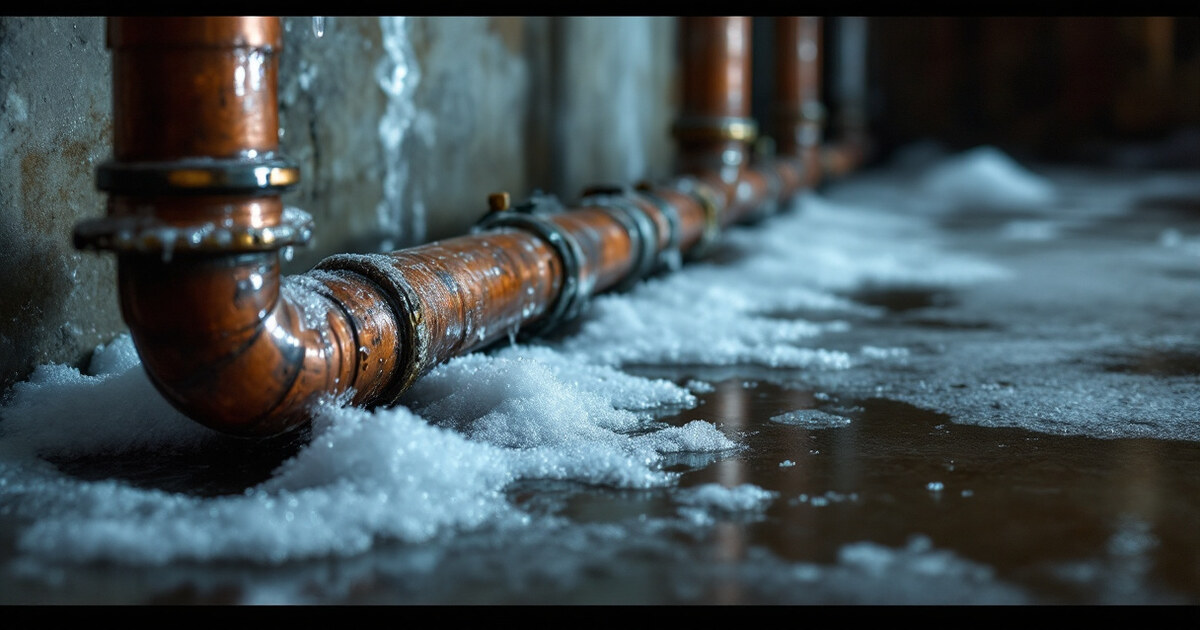
A seasonal vacant-property policy almost never pays out on the burst pipe itself. It pays out on whether you can show the building was properly shut down before the cold arrived. The claim turns on evidence, and the evidence is usually missing.
The gap between "we winterized it" and proof
Most caretaking outfits winterize competently. What they cannot do, six months later, is prove which steps were completed on which date at which property. The technician remembers. The technician has also done forty other properties since, and the notes say "winterized, all good."
An adjuster asked to pay a five-figure water claim will ask narrower questions. Was the water heater drained. Were the traps charged with antifreeze. Was the supply line in the crawl space blown out. Was the main breaker off, so the building was genuinely de-energized rather than merely unoccupied. Each of those is a yes or no, and each needs a date attached.
Why a checklist alone does not solve it
Handing staff a printed checklist moves the problem rather than fixing it. A paper list gets completed in the truck. A digital list that allows a partial save gets completed at eighty percent and forgotten, because the season is busy and the next property is waiting.
The failure is not laziness. It is that nothing in the workflow forces the question "is this actually finished" at the moment it can still be answered.
The hard close gate
MapleConcierge treats winterization as a service event that cannot reach a closed state while any required step is unanswered. Not a warning, not a reminder. The event stays open, visibly, on the property.
That single constraint changes behaviour in a way reminders never do. An open event on a property in December is an obvious problem. A checklist saved at eighty percent in October looks exactly like one saved at one hundred.
The rationale is written into the template itself rather than living in a manager's head, so it survives staff turnover. Once a building is de-energized, the drain-down is the only freeze protection remaining. There is no thermostat left to catch a mistake.
Dated photographs, attached to the visit
Every service report carries photographs with a capture date that is separate from the upload date. This matters more than it sounds. A technician who uploads photographs the next morning is still documenting yesterday's visit, and the record should say so rather than quietly restating the upload time.
When the report is generated for an adjuster, it shows the property, the date of the visit, the completed steps, the person who performed them, and the photographs taken while the work was done.
What to ask your provider
If you are hiring a caretaker for a seasonal property, ask three questions. Can they produce a dated, photographed record of last year's winterization for a property they no longer service. Can a partially finished winterization be marked complete in their system. Does the record show who performed the work.
If the answer to the first is no, you are insuring a property whose shutdown you cannot evidence. That is a gamble that only looks cheap until the spring.