
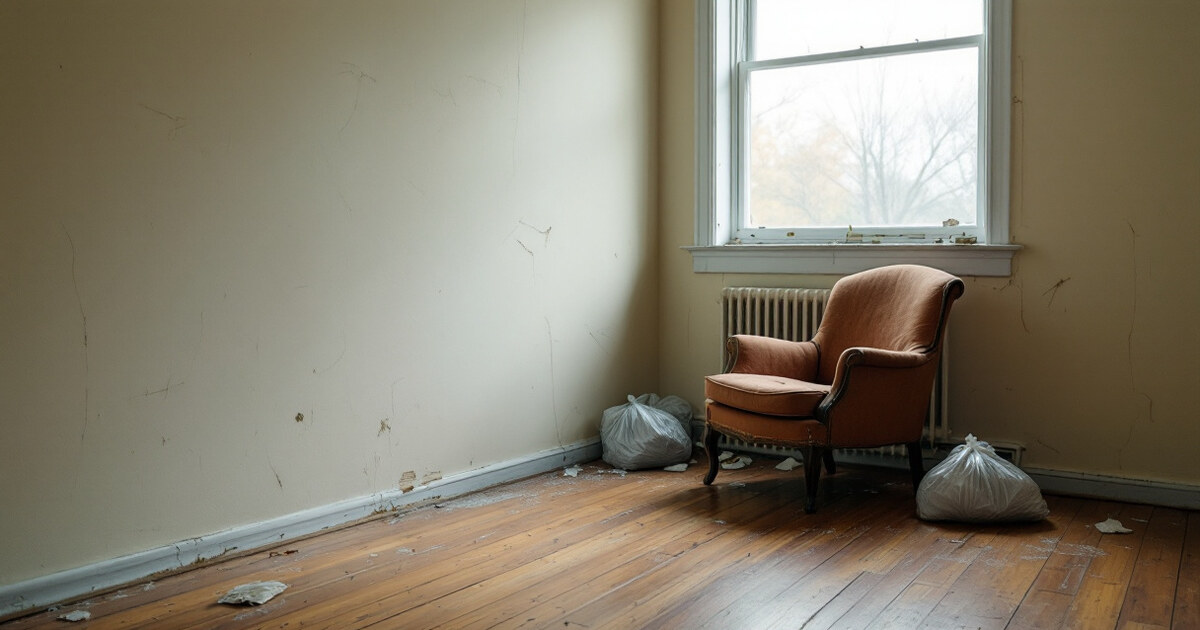

Every property manager takes photographs constantly. Damage, completed repairs, meter readings, move-in condition, the state a unit was left in. Most of those photographs live in a camera roll alongside holiday snapshots and screenshots, sorted by nothing but the date they were taken.
Which means that when the photograph is actually needed — by an owner questioning an invoice, an insurer assessing a claim, or a tribunal deciding whose account to believe — it either cannot be found, or it can be found but proves considerably less than you expected.
What a Loose Photo Fails to Establish
A photograph on its own shows a condition. It does not show any of the things that give it evidentiary weight.
- Which property and unit. One damaged bathroom vanity looks much like another. You may remember; nobody else can verify.
- Why it was taken. Was this the pre-existing condition at move-in, damage found at move-out, or the state before a repair you are billing for? The photograph is identical in all three cases and means something completely different in each.
- Whether it is complete. A single photo of damage invites the question of what the rest of the room looked like. Selective evidence is weak evidence.
- Who took it, and that it has not been altered. File timestamps are metadata, and metadata is editable. This rarely matters, until it does.
Attached to a dated work order or inspection record, all four questions answer themselves. The photo has not changed; the context has, and the context is what carries the weight.
The Operational Cost, Which Is Larger
Evidentiary problems are occasional. The everyday costs of photos living on a phone are constant.
Owner questions take far longer to answer, because the answer requires scrolling. Vendors arrive without seeing the problem, because describing a leak over the phone is a poor substitute for a photo attached to the dispatch, and so they arrive without the right parts. Repeat issues cannot be recognized as repeat issues, because there is no history attached to the unit — you fix the same toilet three times across two years without noticing the pattern that would have told you to replace it.
And if the phone is lost, broken, or replaced without a complete backup, the entire record goes with it. This happens more often than people expect, and it is discovered at the worst possible time.
The single-person dependency is the quietest problem. If your colleague needs to handle a property while you are away, the visual history of that property is inaccessible to them. Not disorganized — inaccessible.
Doing It Properly
Photograph into the record, not into the camera roll
The practical fix is to take the photograph from within the work order or inspection, so the association is automatic. If photos are captured first and filed later, filing is a separate task that competes with everything else, and it will lose. Any workflow that depends on end-of-day sorting will fail within a fortnight.
Photograph the sequence, not just the problem
For anything being billed or likely to be disputed, capture before, during where relevant, and after. A before-and-after pair attached to an invoice answers an owner’s question before they ask it, and owner statements accompanied by visual evidence generate noticeably fewer queries.
Establish context in the frame
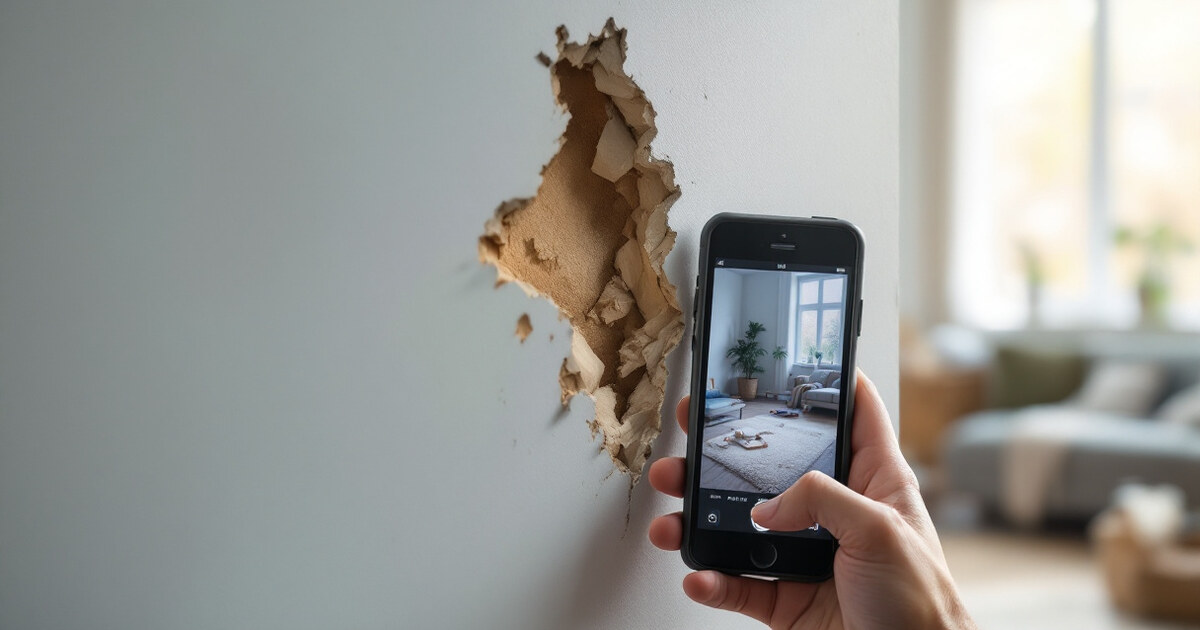
A close-up of a crack proves a crack exists somewhere. Take the wide shot first to establish the room, then the close-up. The pair together locates the damage; the close-up alone does not.
Photograph more than the deficiency
At inspections, capture the whole unit including everything in good condition. This does two things: it prevents a later argument that you only documented what suited you, and it establishes the baseline for every other room, which is the part you will wish you had.
Standardize the routine
Same rooms, same order, same angles, every inspection. Comparison across time only works if the images are comparable, and it is remarkable how much easier a move-out assessment becomes when the move-in photos were taken from the same positions.
Capture serial numbers and labels
Every appliance, furnace, water heater and panel. Model and serial numbers photographed once save a trip on every subsequent service call, and they establish equipment age for reserve planning and for warranty claims.
The Retention Question
Keep inspection photographs for the full tenancy plus the limitation period applicable in your province — ask your insurer and your lawyer for the specific figure, but several years past the end of the tenancy is the usual answer. Repair documentation should be kept for the life of the component, because it is the service history you will want when deciding whether to repair again or replace.
Storage is cheap, and the storage cost is trivially less than the cost of one disputed deposit you cannot evidence.
The Test
Here is a simple check on your current practice. Pick a unit and a date eighteen months ago. Can you produce, in under two minutes, the photographic record of its condition at that point, and can a colleague do the same without your help?
If the answer is no, the photographs you have been diligently taking are not yet a record. They are raw material for one.