
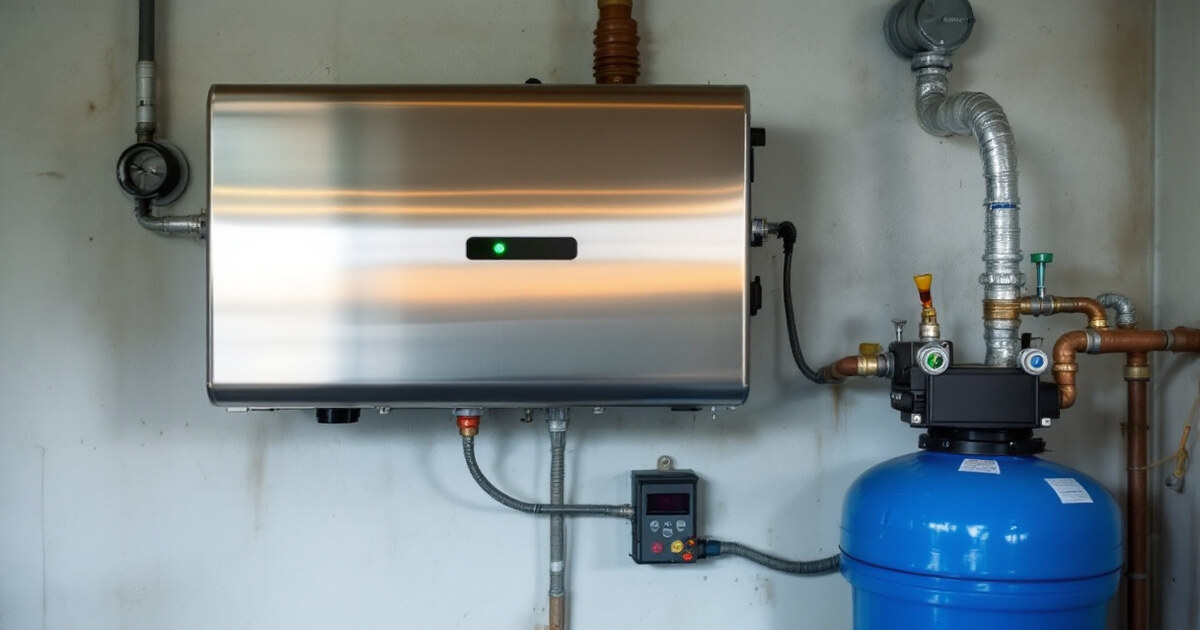
A UV disinfection lamp on a private well is rated for a period of powered operation, commonly around a year of continuous running. Most controllers count down only while the unit has power. Unplug the building and the countdown pauses.
This is a sensible design and it quietly breaks every calendar-based maintenance schedule attached to it.
The arithmetic that catches people out
Consider a seasonally operated cottage that is de-energized for the off-season and live for the rental months. The lamp accumulates only a portion of a year of powered operation per calendar year. A schedule that says "replace the UV lamp every spring" replaces a lamp with substantial life left, every year, forever.
Run the same logic the other way and it is worse. A provider who notices the over-replacement and switches to every second spring will eventually hit a season where the counter runs out in August, mid-occupancy, on a property served by an untreated well.
Neither schedule is tracking the thing that actually matters, which is the remaining count on the controller.
Read the counter, do not infer it
The defensible practice is simple to state. Read the remaining-days count at every visit and log it. Replace the lamp at the first seasonal opening where the remaining count will not carry the property through the coming season. Replace it before the counter reaches zero, never after.
That rule requires the reading to be recorded somewhere durable, at every visit, by whoever is on site. If it lives in a technician's memory it is not a practice, it is a hope.
How MapleConcierge models it
Equipment lifecycle in MapleConcierge is driven by service events rather than wall-clock time. The relevant reading is captured as structured data on the service report for the visit, not as a sentence in a notes field, so it can be compared across visits and trended.
The distinction between structured data and free text is the whole point. A notes field that says "UV looks fine" cannot answer the question "will this lamp survive July." A recorded remaining-days count can, and it can raise the question before the season starts rather than during it.
Because the reading is attached to a dated service report, the history is also the evidence. If a water quality question ever arises, the record shows what the controller said on each visit and when the lamp was changed.
The compliance angle
If the property is rented, the water is not just yours. Depending on your jurisdiction and how the property is marketed, supplying water to paying occupants can carry obligations that a purely private well does not.
Annual bacteriological testing is the usual baseline, and it belongs in the same record as the lamp history for the same reason: the two together tell a coherent story about whether the water was safe. Separately, they are trivia.
The short version
Do not schedule UV maintenance by the calendar on any property that is seasonally powered down. Read the counter, write it down where it will still exist next year, and replace the lamp on the reading rather than the date.